Natural testosterone boosters vs TRT: the honest difference
Quick answer
A natural testosterone booster is a dietary supplement of botanicals or nutrients, sold without a prescription, with no requirement to prove it does anything. Testosterone replacement therapy is a prescription hormone, given for a diagnosed deficiency, that raises testosterone reliably and suppresses your own production while you take it. They share a marketing vocabulary and almost nothing else.
The two are constantly compared as though they sit on the same scale at different strengths. They do not. This is what separates them legally, biologically and practically — and why the comparison itself misleads.
The legal difference comes first
Testosterone is a controlled prescription medicine. A booster is a dietary supplement: it may be sold without pre-market approval, may not claim to treat any condition, and carries the standard disclaimer that its statements have not been evaluated by the FDA. That single distinction explains most of what follows — including why one has dose-response data and the other frequently has none.
What each one actually does
| Natural booster | Testosterone replacement | |
|---|---|---|
| What it is | Botanicals, amino acids, vitamins and minerals | The hormone itself — gel, injection, pellet or patch |
| Access | Over the counter | Prescription, after diagnosis |
| Effect on serum testosterone | Little to none for most ingredients | Reliable and dose-dependent |
| Effect on your own production | None | Suppressed while treatment continues |
| Effect on fertility | None established | Sperm production is suppressed |
| Monitoring | None | Blood tests, haematocrit, PSA, ongoing review |
| Reversibility | Stop and nothing changes | Stopping needs medical planning |
Why boosters mostly do not raise testosterone
This is not an opinion. A systematic review asking directly whether products sold as testosterone boosters raise serum total testosterone found that the great majority of the ingredients involved had no supporting human evidence (Morgado et al., Int J Impot Res, 2024). An analysis of the fifty best-selling online boosters found only a minority of listed ingredients had human data behind the claim, and that several products delivered vitamins and minerals above recommended upper limits (Balasubramanian et al., J Sex Med, 2019). The ingredients with the most human data in this category were mostly studied for something else entirely — ashwagandha for perceived stress and sleep (Cheah et al., PLoS One, 2021), maca for self-reported desire with no change in testosterone (Gonzales et al., Andrologia, 2002).
Why TRT is not the easy upgrade it sounds like
Replacement therapy is prescribed for diagnosed hypogonadism, and guidelines are deliberately restrictive about who qualifies: consistent symptoms plus unequivocally low morning total testosterone on two separate occasions (Bhasin et al., J Clin Endocrinol Metab, 2018). The reason for the caution is that exogenous testosterone shuts down the body’s own signalling loop. Your testes stop being asked to produce, sperm production falls, and coming off treatment requires planning. There is monitoring involved — haematocrit, PSA, symptom review — because the therapy has real effects and therefore real risks.
For a man in his forties with normal levels, poor sleep and thirty extra pounds, TRT is not the answer to the question he is asking. Neither is a gummy. The answer is in the levers that have controlled evidence behind them.
The middle ground nobody advertises
Between “buy a gummy” and “start hormones” sits the option most men skip: find out what your level actually is, and find out why. If it is low, the cause matters — a testicular cause and a pituitary cause are treated differently, and some causes are reversible without hormones at all. Obstructive sleep apnoea, significant obesity, opioid use and certain medications all suppress testosterone and all have their own treatments. How the diagnosis is made covers what that assessment involves.
Never buy testosterone without a prescription. Products sold online as testosterone or as prescription-strength enhancers have repeatedly been found to contain undeclared pharmaceutical ingredients, and unsupervised hormone use carries fertility and cardiovascular risk.
What men are usually actually asking
Almost nobody types “booster vs TRT” because they are curious about endocrinology. They type it because they feel flat, their drive has dropped, and they are trying to work out how serious the situation is and how much intervention it deserves. Framed that way, the comparison has a third option that beats both: find out whether anything is actually low.
That matters because the two paths diverge completely depending on the answer. If your testosterone is normal and your sleep is six hours a night, neither a gummy nor a hormone addresses the cause. If it is genuinely low, a supplement is not a treatment and delaying the diagnosis is the real cost. And if it is low for a reason — sleep apnoea, significant weight gain, a medication, a pituitary problem — treating the cause may resolve it without hormones at all.
The cheapest useful step in this whole comparison is a blood test, and it is the step most often skipped in favour of a purchase.
The adulteration risk sits on the supplement side
The men’s supplement aisle has a documented spiking problem. An analysis of supplements named in FDA public notifications found that sexual enhancement products were one of the largest categories containing unapproved pharmaceutical ingredients, most often sildenafil or an analogue of it (Tucker et al., JAMA Netw Open, 2018). That is the practical reason a fast, dramatic effect from a botanical product should worry rather than delight you.
Three claims that should end the conversation
“A natural alternative to TRT.” There is no such thing. An alternative would have to produce a comparable rise in serum testosterone, and no supplement ingredient has demonstrated that in healthy men.
“Restores your natural levels.” Restoring implies a measured deficiency and a measured correction. Neither has happened, because nobody measured you.
“Doctor-approved, no prescription needed.” The absence of a prescription is a regulatory fact about the product category, not a reassurance about its strength. It means nobody was required to prove it does anything.
What an honest supplement page can claim
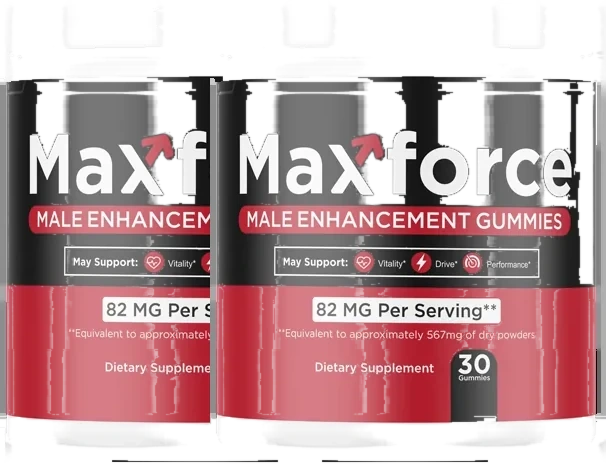
It can name its ingredients, print an amount, describe what those ingredients have been studied for, and support a routine. The MaxForce page states plainly that the gummies are not a treatment for erectile dysfunction, low testosterone or infertility, and that they have not been through a clinical trial of their own. That is the ceiling of what any product in this category can honestly say. Anything above it — “a natural alternative to TRT”, “restores your levels” — is a drug claim from a product with no licence to make one. The general evidence picture is in do testosterone boosters actually work.
Frequently asked questions
Is a natural testosterone booster a substitute for TRT?
No. Testosterone replacement is a prescription hormone that raises testosterone reliably and is given for a diagnosed deficiency under monitoring. Dietary supplements do not have a comparable effect, and most of the ingredients used in them have no human evidence of raising testosterone at all.
Does a testosterone booster suppress your own production like TRT does?
No. Exogenous testosterone suppresses the body's own signalling loop, which is why sperm production falls during treatment and why stopping requires medical planning. A botanical supplement does not add hormone and does not cause that suppression.
Can I try a booster before asking about TRT?
You can, but the more useful first step is a blood test. Symptoms plus two early-morning testosterone measurements tell you whether there is anything to treat, and further tests identify the cause. A supplement trial answers none of those questions and can delay a diagnosis.
Why is buying testosterone online dangerous?
Because it bypasses diagnosis, dosing and monitoring, and because products sold this way have repeatedly been found to contain undeclared or incorrect pharmaceutical ingredients. Unsupervised hormone use carries fertility, blood-count and cardiovascular risks.
Check the current MaxForce label, price and guarantee
Package contents, price, shipping and the 60-day return window are set by the seller and can change without notice. Confirm them on the official order page before you buy.
Check Seller TermsReferences
- Morgado A, et al. Do “testosterone boosters” really increase serum total testosterone? A systematic review. Int J Impot Res. 2024. PubMed: 37697053
- Balasubramanian A, et al. Testosterone imposters: an analysis of popular online testosterone boosting supplements. J Sex Med. 2019. PubMed: 30770069
- Cheah KL, Norhayati MN, Husniati Yaacob L, Abdul Rahman R. Effect of Ashwagandha (Withania somnifera) extract on sleep: a systematic review and meta-analysis. PLoS One. 2021. PubMed: 34559859
- Gonzales GF, et al. Effect of Lepidium meyenii (MACA) on sexual desire and its absent relationship with serum testosterone levels in adult healthy men. Andrologia. 2002. PubMed: 12472620
- Bhasin S, et al. Testosterone therapy in men with hypogonadism: an Endocrine Society clinical practice guideline. J Clin Endocrinol Metab. 2018. PubMed: 29562364
- Tucker J, Fischer T, Upjohn L, Mazzera D, Kumar M. Unapproved pharmaceutical ingredients included in dietary supplements associated with US Food and Drug Administration warnings. JAMA Netw Open. 2018. PubMed: 30646238
These references cover individual ingredients and men’s health generally. None tested the finished MaxForce gummy, which has no published trial of its own.